
Why Strength Training Became My Most Powerful Tool for Managing Hashimoto's
How I went from weekend warrior and chronic yo-yo exerciser to building muscle, reducing body fat and feeling stronger than ever in my late 30s

Exercise throughout my teens and early twenties mainly consisted of dancing at clubs, festivals and house parties. While I was active, I wasn't intentionally exercising or building strength. My first attempts at getting fit involved a mixture of running, YouTube workouts and random gym sessions, but I lacked consistency and structure. I'd train hard for a week, undo it all at the weekend and start again on Monday.


I had to really dig through some old photos for this article because I spent many years avoiding the camera altogether. Looking back, I wasn’t dramatically overweight, but I felt uncomfortable in my body, constantly bloated and far heavier than I felt I should have been. Confidence was low and I rarely felt at ease in my own skin. Although I hadn’t yet been diagnosed with Hashimoto’s at this point, hindsight is a wonderful thing, and I strongly suspect my thyroid was already beginning to struggle long before I had the answers.
Why strength training is particularly beneficial for women with thyroid dysfunction
One of the biggest misconceptions I see is that exercise is purely about burning calories.
For years, that was how I viewed it too.
If I wasn’t sweating, exhausted or seeing a huge calorie burn on my watch, I assumed it wasn’t doing much.
What I understand now is that strength training isn’t just changing how many calories you burn during a workout.
It’s changing your body itself.
And that’s especially important when you have a thyroid condition.
Thyroid hormones influence almost every cell in the body, including muscle tissue. When thyroid function is impaired, many people experience symptoms such as:
fatigue
muscle weakness
slower recovery
reduced exercise tolerance
weight gain
joint aches
In other words, some of the very symptoms that make exercising feel harder in the first place.
This is why I think so many women with hypothyroidism end up trapped in a frustrating cycle.
We’re tired.
We gain weight.
We become frustrated.
So we do more cardio and eat less.
Which often leaves us feeling even more exhausted.
The goal shouldn’t simply be to lose weight.
The goal should be to build a healthier, more resilient body.
And one of the best ways to do that is by building muscle.
Muscle is far more than a cosmetic goal
When many women hear the words “strength training”, they immediately think about aesthetics.
Toned arms. A smaller waist. A peachier bum.
And whilst there’s absolutely nothing wrong with wanting those things, muscle does so much more than improve appearance.
Muscle tissue is metabolically active.
The more muscle you have, the more energy your body requires simply to maintain itself.
This doesn’t mean lifting weights suddenly gives you a supercharged metabolism overnight, but it does help support long-term metabolic health.
Muscle also plays a key role in:
blood sugar regulation
insulin sensitivity
healthy ageing
mobility
balance
recovery
bone health
Research consistently shows resistance training improves insulin sensitivity, helping the body respond more effectively to insulin and regulate blood sugar levels more efficiently.
This is particularly relevant because insulin resistance is more common in people with hypothyroidism and autoimmune disease.
A systematic review published in Sports Medicine found that resistance training improves lean muscle mass, strength and body composition while also supporting metabolic health. This is particularly relevant for women with hypothyroidism, where maintaining muscle mass can become more challenging due to reduced metabolic activity and fatigue.
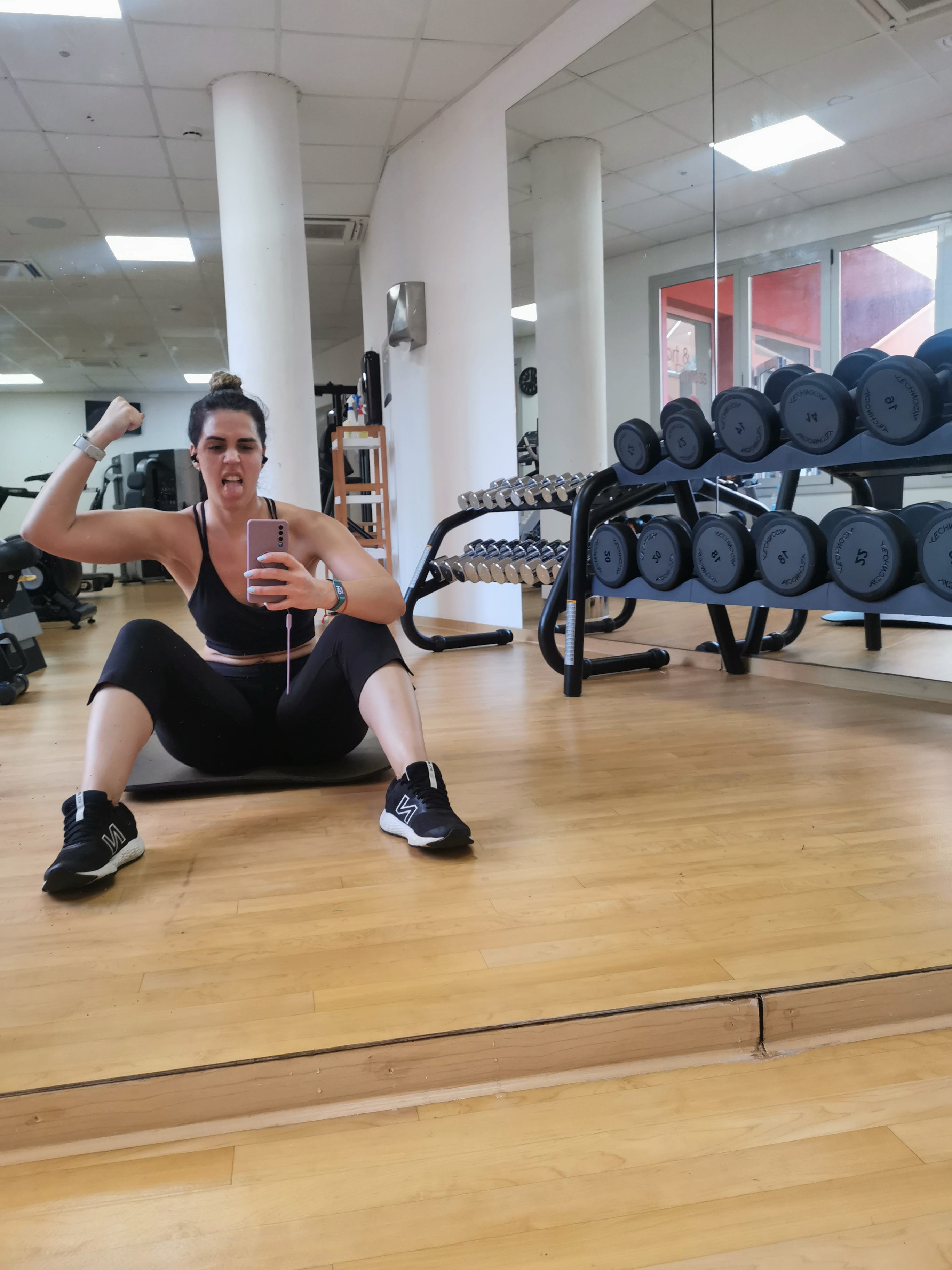
The missing piece nobody told me
For years, my focus was entirely on losing weight and dropping dress size.
I rarely thought about gaining muscle.
Because what I actually wanted wasn’t to be lighter.
I wanted to:
feel stronger
have more energy
feel comfortable in my clothes
improve my confidence
stop constantly thinking about food and my body
Strength training gave me all of those things.
The scales didn’t always move quickly.
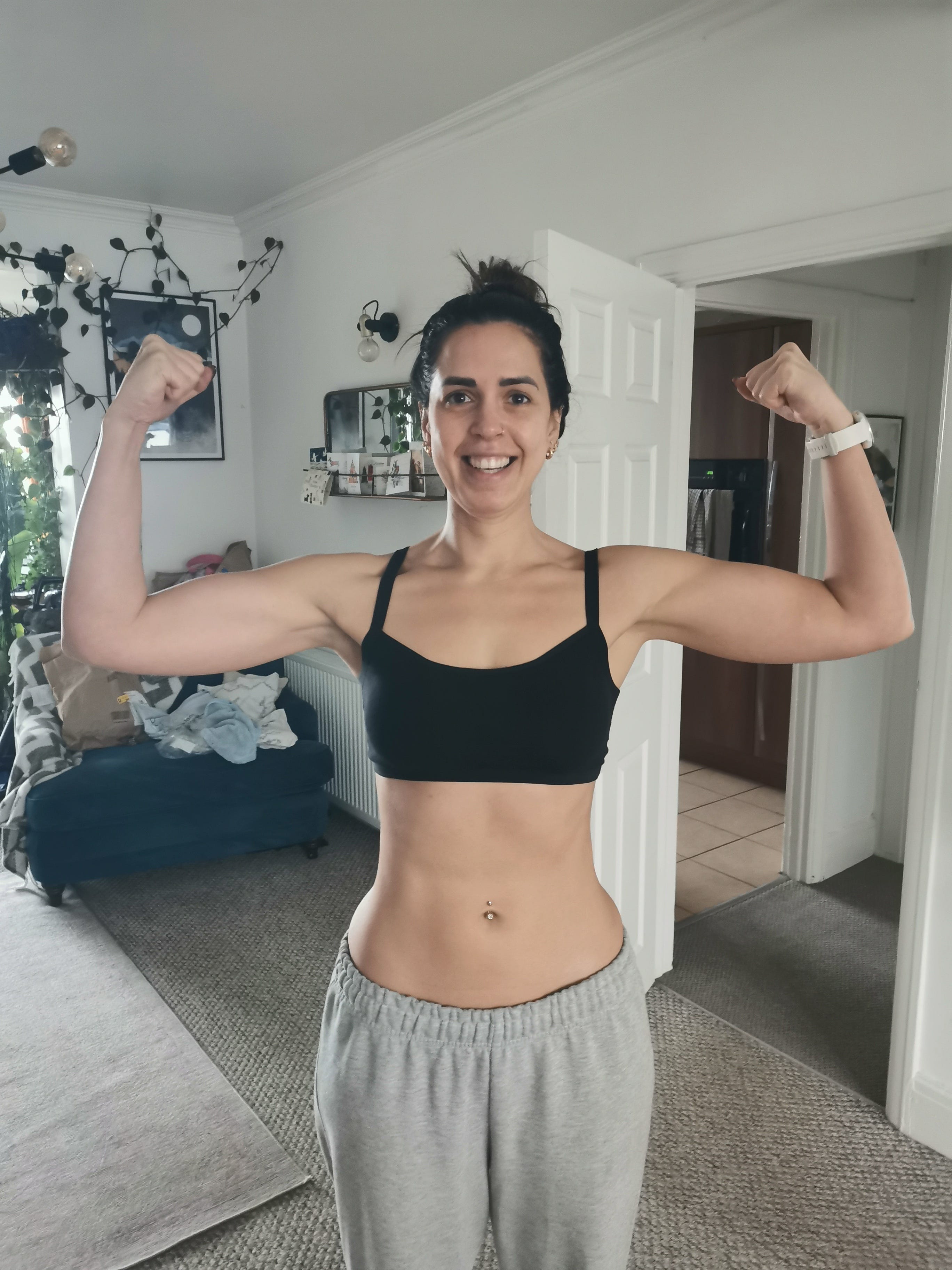
But my body composition changed dramatically.
I became stronger. My posture improved. My confidence improved.
And perhaps most importantly, I started focusing on what my body could do rather than what it looked like.
One of the lesser-known benefits of strength training is its effect on inflammation. A review published in Frontiers in Physiology found that regular resistance exercise can help reduce chronic low-grade inflammation while improving immune regulation. Whilst exercise isn't a cure for autoimmune disease, this may be one reason many people report improved symptoms, resilience and wellbeing when they establish a consistent strength training routine.
The lymphatic connection nobody talks about
After writing recently about the lymphatic system, it made sense why strength training has helped me so much.
The lymphatic system doesn’t have a pump.
Unlike blood circulation, which relies on the heart, lymph relies heavily on movement and muscle contractions.
Every squat. Every deadlift. Every walking lunge.
Every step.
Helps move lymphatic fluid around the body.
Whilst strength training isn’t a substitute for things like walking, hydration or lymphatic drainage, it can be a powerful way to support circulation and fluid movement.
Some of the benefits I’ve noticed haven’t just been physical strength.
They’ve also included:
less puffiness
less fluid retention
better circulation
improved recovery
feeling less sluggish overall
Which is probably why I now view strength training as so much more than exercise.
It’s one of the foundations that helps my entire body function better.
The principle that changed everything: progressive overload
When I first started going to the gym, I thought success meant turning up and doing something.
And to a degree, that’s true.
Consistency will always beat perfection.
But eventually I realised there was a reason some people seemed to keep getting stronger, leaner and fitter while others stayed exactly the same year after year.
The difference was something called progressive overload.
It sounds complicated, but it’s actually very simple.
Your body adapts to the demands you place on it.
If you repeatedly ask your muscles to do the same thing over and over again, eventually they become efficient at that task and stop changing.
Think about carrying shopping bags.
The first few times might feel difficult.
A few months later, carrying the same bags feels easy because your body has adapted.
The same thing happens in the gym.
If you continue using the same weights, performing the same number of repetitions and never challenging yourself, your progress will eventually stall.
Progressive overload simply means gradually increasing the challenge over time.
That might look like:
increasing the weight slightly
performing an extra repetition
adding another set
improving your technique
slowing down the movement to increase control
The key word is gradually.
You don’t need to double your weights overnight. You don’t need to leave every workout exhausted.
You simply need to give your body a reason to adapt.
This is where I went wrong for years.
I’d go through phases of exercising hard, but I wasn’t tracking anything.
I had no idea whether I was lifting more, getting stronger or improving.
Now I keep a note of every workout.
Not because I’m obsessed with numbers, but because progress becomes much easier to see.
A few months ago I might have squatted 40kg.
Today I might be lifting 50kg for the same number of repetitions.
That’s progress.
And those small improvements add up surprisingly quickly.
This is also why I encourage women not to be afraid of lifting heavier weights.
One of the biggest myths we hear is:
“I don’t want to get bulky.”
The reality is that most women find building significant muscle incredibly difficult.
What usually happens instead is:
increased strength
improved body composition
better posture
more confidence
improved metabolic health
In other words, exactly what many of us are looking for.
The goal isn’t to destroy yourself in every workout.
The goal is to become slightly stronger than you were last month.
And then repeat that process for years.
That’s where the magic happens.
Where should you start if you’re a complete beginner?
If you’ve never stepped foot in a gym before, let me reassure you of something:
Every single person you see confidently lifting weights today was once a beginner too.
Including me.
I know gyms can feel intimidating.
Especially if you’re already struggling with:
fatigue
weight gain
confidence
joint pain
feeling disconnected from your body
But the good news is that you don’t need a fancy gym membership or complicated programme to start building strength.
You simply need to start somewhere.
Option 1: Start at home
If the thought of a gym fills you with dread, begin at home.
There are some fantastic beginner-friendly strength workouts available on YouTube using:
bodyweight
resistance bands
dumbbells
kettlebells
The goal isn’t perfection.
It’s learning movement patterns and building confidence.
Exercises such as:
squats
lunges
glute bridges
push ups (against a wall if needed)
rows with resistance bands
can all be incredibly effective.
Option 2: Invest in a personal trainer
This is honestly one of the best investments I made.
A good personal trainer can:
teach proper form
help prevent injury
build a programme around your goals
improve confidence
help you progress safely
If you have Hashimoto’s, any autoimmune disease or existing injuries, I’d strongly recommend finding someone who is willing to work with your energy levels rather than simply trying to push you as hard as possible.
The right trainer should understand that recovery matters just as much as training.
Option 3: Join classes
One of the reasons I’ve stayed consistent is because I genuinely enjoy the social aspect of training.
Most gyms offer classes ranging from beginner-friendly sessions right through to more advanced strength and conditioning work.
Not only do the classes push me, but they also keep training fun.
And when something is enjoyable, you’re much more likely to stick with it.
A simple 6-week beginner plan
You don’t need a complicated programme to start seeing results.
For the first six weeks, focus on mastering the basics.
Aim for two to three full-body sessions per week.
Each session could include:
Lower body
Squats
Romanian deadlifts
Glute bridges
Upper body
Chest press
Seated row
Shoulder press
Core
Plank
Dead bugs
Start with:
2 sets
10-12 repetitions
a weight that feels challenging but manageable
Focus on learning technique first.
Once the movement feels comfortable, gradually increase the weight or repetitions.
Remember, your goal isn’t to leave the gym crawling.
Your goal is to leave knowing you could come back and do it again.
The biggest mistake beginners make
Most people massively overestimate what they can achieve in a few weeks and underestimate what they can achieve in a year.
The women I see making the best progress aren’t necessarily the strongest.
They’re the most consistent.
They show up.
Week after week.
Month after month.
Even when motivation disappears. Because motivation comes and goes.
Consistency is what changes your body.
The truth is that building strength isn’t about finding the perfect programme.
It’s about repeating the basics long enough for them to work.
And if you can do that, the results will come.
Protein and macros: why what you eat matters just as much as what you lift
Another big lesson I’ve learned over the last few years is that strength training alone isn’t enough. What you feed your body plays an equally important role, especially if you have thyroid dysfunction. Hormones, metabolism and muscle recovery all rely on adequate nutrition.
Protein is non negotiable.
When you lift weights, your muscles need amino acids to repair, recover and grow stronger. Without enough protein, progress can be much slower, even if you’re training consistently.
How much protein do you need?
A good starting point is:
General health
1.2 to 1.4g per kg of body weight
Active women and those strength training
1.6 to 2.2g per kg of body weight
For example, a woman weighing 70kg who is strength training regularly would benefit from around 112 to 154g of protein per day.
That might sound like a lot initially, but it becomes much more achievable when you include a good source of protein at every meal.
Protein isn’t just important for building muscle. It also supports:
recovery
hormone production
immune function
blood sugar balance
healthy ageing
And for those of us with Hashimoto’s, supporting muscle mass becomes even more important as we get older.
Don’t forget carbohydrates and fats
For years I was terrified of carbohydrates.
Like many women, I thought eating less would help me lose weight faster.
In reality, it often left me feeling exhausted, craving sugar and struggling to recover from exercise.
Carbohydrates provide the body with its preferred source of fuel, particularly during exercise, whilst healthy fats are essential for hormone production and nutrient absorption. Great sources of carbs are sweet potatoes, butternut squash, rice, and oats. Healthy fats can be olive oil, avocados, olives, nuts, seeds, oily fish such as salmon, mackerel and trout. If you want more help with ensuring you have a balanced meal whilst training, a good PT can also help with this.
The goal isn’t to eliminate food groups.
The goal is to fuel your body properly.
A note on soy
As many of you know, I personally avoid soy because I have Hashimoto’s.
Whilst research on soy and thyroid function is mixed, some studies suggest excessive soy intake may interfere with thyroid hormone absorption or function in susceptible individuals, particularly when iodine intake is low.
For that reason, I prefer to focus on other protein sources such as:
eggs
poultry
fish
grass fed meat
Greek yoghurt
collagen
nuts and seeds
What changed when I increased my protein?
One of the most noticeable changes for me wasn’t actually muscle growth.
It was recovery.
I felt less hungry between meals.
My energy became more stable.
Cravings reduced.
And I found I could tolerate training far better than before.
Combined with consistent strength training, prioritising protein has played a huge role in helping me build muscle, reduce body fat and maintain the strength I’ve worked so hard to achieve.
Because ultimately, you can have the best training programme in the world, but if you’re not giving your body the nutrients it needs to recover and adapt, you’re making the process far harder than it needs to be.
Why I take creatine (and why I think more women should consider it)
If there was one supplement I’d recommend alongside strength training, it would probably be creatine monohydrate. Link to the one I personally take here «
Not because it’s trendy. Not because it’s the latest wellness fad.
But because it’s one of the most researched supplements available and the evidence behind it is incredibly strong.
For years, I assumed creatine was only for bodybuilders or young men trying to get bigger in the gym.
I couldn’t have been more wrong.
In reality, creatine can be beneficial for women of all ages, particularly those who are strength training, entering perimenopause or trying to maintain muscle mass as they get older.
Affiliate Disclosure: This article may contain affiliate links, including Amazon Associate links. If you purchase through these links, I may receive a small commission at no additional cost to you. As always, I only share products I personally use, have used myself, or would recommend to clients and readers.
What exactly is creatine?
Creatine is a naturally occurring compound found in the body and in foods such as red meat and fish.
Its primary role is helping produce energy within cells, particularly during short bursts of high intensity activity such as:
lifting weights
sprinting
jumping
climbing stairs
carrying heavy shopping
Around 95% of the body’s creatine is stored in muscle tissue, where it acts as a quick energy reserve.
Supplementing with creatine helps increase these stores, allowing muscles to work harder and recover more effectively.
The benefits go far beyond building muscle
Most people associate creatine with muscle growth.
Whilst it can certainly help support strength and muscle development, that’s only part of the story.
Research has shown creatine may also help support:
strength and power output
recovery between training sessions
muscle preservation during fat loss
healthy ageing
bone health
cognitive function
memory and concentration
This is one of the reasons creatine has become increasingly popular amongst women.
We’re not just interested in looking strong. We want to stay strong.
Why this matters for women with thyroid disorders
One of the biggest challenges many women with thyroid dysfunction face is maintaining muscle mass.
When you’re tired, struggling with recovery or dealing with fluctuating energy levels, it can be much harder to train consistently.
Anything that supports recovery and performance can therefore be incredibly valuable.
Whilst creatine doesn’t directly treat Hashimoto’s, it can help support the things many of us are trying to improve:
strength
energy production
exercise performance
recovery
body composition
Personally, I’ve taken 5g of creatine monohydrate daily for almost a year now and it’s become one of the few supplements I rarely miss.
Combined with adequate protein intake and consistent strength training, it has played a role in helping me build muscle and improve my performance in the gym.
I’ve also seen plenty of comments online raising concerns about creatine building up in the liver or kidneys and the importance of monitoring blood markers. I actually agree that regular testing is sensible, particularly for anyone with existing liver or kidney concerns, or those taking higher doses than recommended.
For me, I recently had a comprehensive set of blood tests and my creatinine levels have remained stable throughout the past year despite supplementing daily. Whilst this is only my personal experience and not a guarantee of how someone else will respond, it was reassuring to see that regular use at 5g per day had not negatively impacted my markers.
As with any supplement, context matters. What works well for one person may not be appropriate for another, which is why I always encourage people to discuss supplementation with their healthcare practitioner and to monitor their blood work where appropriate.
What does the research say?
A large body of research has demonstrated that creatine supplementation can improve muscular strength, lean body mass and exercise performance.
More recently, researchers have also started exploring its role in brain health and cognitive function, particularly in women and older adults.
A review published in Nutrients concluded that creatine is not only one of the most effective supplements for improving exercise performance but also one of the safest when used appropriately.
A quick note on water retention
Yes, creatine can increase water storage within muscle cells.
But this is very different from feeling bloated or puffy.
In fact, many people find their muscles look fuller and stronger rather than softer.
It’s one of those supplements that often sounds more complicated than it actually is.
My take
If you’re strength training regularly, prioritising protein and looking for a supplement with an impressive amount of research behind it, creatine is worth considering.
It’s not a magic pill. It won’t replace good nutrition. And it certainly won’t do the work for you.
But as part of a solid foundation, it’s one of the few supplements I genuinely believe earns its place in my daily routine.
What a realistic week of training looks like for me now
A typical week currently looks something like this:
Monday
Glute class followed by a barbell class focusing on a specific lift or movement pattern.
Depending on the training block, that might be:
squats
bench press
deadlifts
pull-up progressions
overhead press
It’s one of my toughest sessions of the week and often leaves me questioning my life choices halfway through. Shout out to Pat for these great classes!
Tuesday
Upper body strength training.
Usually focusing on:
back (lat pulls downs, cable row, assisted pull ups etc)
shoulders (lateral raises with dumbells, over head press)
chest (bench press with barbell or dumbells)
arms (bicep curls, tricep cable pulls etc)
This is where I work on improving strength and technique with my main lifts.
Wednesday
Lower body session. My favourite!
Typically:
glutes (bulgarian split squats, heavy walking lunges, leg press, hip thrusts etc)
hamstrings (single leg RDL’s)
quads (leg extension)
With a mixture of compound lifts and accessory work.
Thursday
Yoga or rest day, depending on how I’m feeling.
A younger version of me would have viewed this as a wasted workout.
Now I see it as one of the most valuable sessions of the week.
Mobility, flexibility, breathing and recovery are all part of getting stronger.
Friday
Bodybuilding class run by my gym’s owner, Tom. Shout out to Ministry of Fitness and all his hard work making this gym so cool!
This is one of my favourite sessions because it’s challenging but also incredibly supportive.
The atmosphere is fantastic and it’s a great way to finish the working week.
Saturday
Pilates or chill.
Again, something I never would have prioritised in my 20s.
But improving core strength, stability and movement quality has helped me tremendously in the gym as well as improve my posture and back strength.
Sunday
Rest, walking and recovery.
No guilt.
No trying to make up for missed workouts.
Just allowing my body to recover and prepare for the week ahead.
Alongside this, I aim for between 10,000 and 13,000 steps most days.
Walking is one of the most underrated forms of movement available.
It’s fantastic for:
blood sugar regulation
stress management
recovery
digestion
lymphatic circulation
Why recovery matters more than most women realise
If you have an under-active thyroid, recovery isn’t optional.
It’s part of the programme and for years I ignored this.
I thought more exercise would automatically equal better results.
What I’ve learned is that the body adapts during recovery.
Not during the workout itself.
Training creates the stimulus. Recovery is where the magic happens.
That’s why I pay just as much attention to:
sleep
protein intake
hydration
stress management
rest days
as I do my workouts.
When those foundations are in place, my training improves dramatically.
When they’re not, my body lets me know fairly quickly.
The best programme is the one that works for your life
I want to stress that this is what works for me right now, and I’ve built up to this slowly over several years. And this is not to say I can manage this every single week, as expected - life gets in the way or you suffer a set back with health or stress load (for me recently the UK’s heatwave was unbearable for me and only managed to do 1 workout in the week) and that’s ok!
You do not need to train six days per week.
You do not need a bodybuilding gym membership.
And you certainly don’t need to be deadlifting 80kg to experience the benefits of strength training.
For some people, two full body sessions per week will be transformational.
For others, three sessions and a couple of walks may be perfect.
The goal isn’t to copy somebody else’s routine.
The goal is to find a sustainable approach that supports your health, energy and lifestyle long term.
Because strength training isn’t something I’m doing for a holiday anymore.
I’m doing it because I want to be strong, capable and independent for decades to come.
And that’s a very different mindset.


Final thoughts
Strength training has transformed far more than my body.
It has changed how I experience life with Hashimoto’s.
It has improved my confidence, helped me build resilience, supported my lymphatic health and given me a much greater sense of trust in what my body is capable of.
Perhaps the biggest lesson I have learned is that progress is not about perfection.
It is about consistency. Showing up when you can. Listening to your body.
Being patient enough to let small improvements compound over time.
Whether you are lifting your first pair of dumbbells at home, thinking about joining a gym or returning to exercise after a long break, remember that everybody starts somewhere.
And you certainly do not need to look like an athlete before you deserve a place in the weights room.
Start where you are. Build gradually. Stay consistent.
And give your body the time it needs to adapt.
If there is one thing I wish I had learned sooner, it is that strength training is not just about changing how you look.
It is one of the most powerful tools we have for supporting metabolic health, maintaining muscle, improving bone density, regulating blood sugar, supporting healthy ageing and building confidence in our bodies.
For me, it has become one of the foundations of living well with Hashimoto’s.
And I have no intention of stopping any time soon.
I’d love to know, what has your experience with strength training been?
Do you currently lift weights, are you thinking about starting, or is there something holding you back?
Let me know in the comments.
This is such a great and informative read! I was diagnosed Hypothyroidism 21 years ago. I was diagnosed Hashimotos last year in 2025... 20 years after! I had no idea until now that knowing you have Hashimtos is very important! Ive been feeling drawn to weights but honestly, and I know I used but, Ive had a lot going on and it just feels like more work... tips to get myself up and moving in the morning to learn to love it!