
I was told I needed surgery… until I looked at my thyroid, lymph and lifestyle
The link between lymphatic health, circulation and the changes that actually made a difference for me


For years, I was convinced I had lipoedema.
Not just a passing thought.
Properly convinced.
I even had a consultation with a specialist surgeon in Madrid who looked at my photos and symptoms and told me I had Type 2 lipoedema and that surgery would likely be the best option.
Which, as you can imagine, is not something you hear lightly in your 30’s.
At the time, it felt like confirmation of what I already believed:
“This is just how my body is and the only way to fix it is something drastic.”
And honestly, I nearly went ahead with it.
The system most people never think about
Before we get into what changed for me, let’s take a step back.
The lymphatic system is part of your immune system.
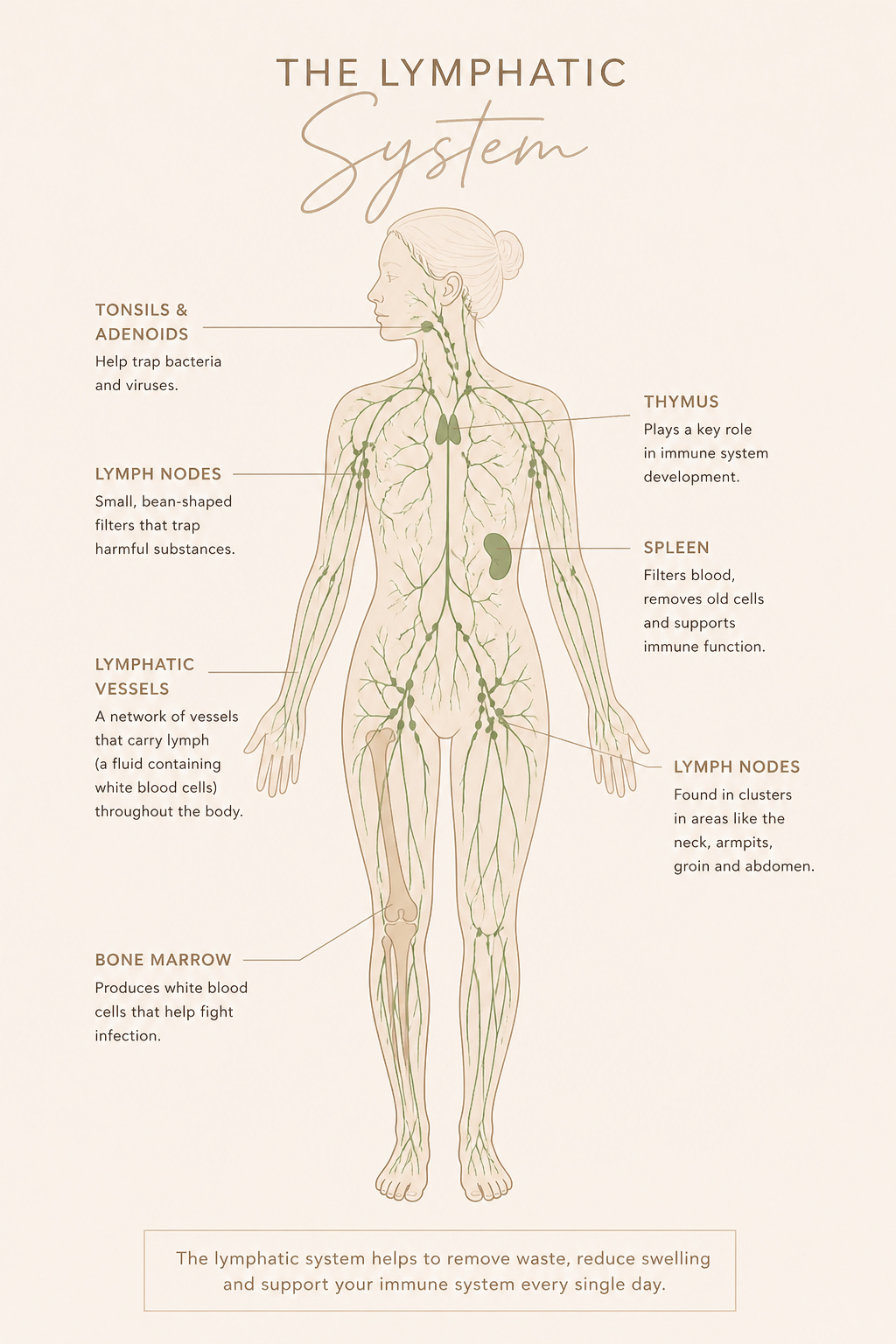
It helps:
move fluid around the body
remove waste and toxins
support immune function
regulate inflammation
Unlike your blood circulation, which has the heart as a pump…
👉 your lymphatic system has no pump
It relies on:
movement
muscle contraction
breathing
manual stimulation
Which means if you’re:
sedentary
stressed
inflamed
not recovering well
…it can become sluggish.
And when it does, you tend to notice:
puffiness
swelling
heavy legs
fluid retention
that “stuck” feeling in your body
Why circulation and thyroid health are more connected than you think
Something that often gets overlooked in this conversation is circulation.
Because while the lymphatic system doesn’t have a pump, your circulatory system (blood flow) is just as important.
And the two are closely linked.
If circulation is sluggish, lymph flow tends to be sluggish too.
This becomes even more relevant with an underactive thyroid.
Thyroid hormones influence:
heart rate
blood vessel function
circulation efficiency
So when thyroid function is lower, everything can slow down.
Which is why so many women experience:
cold hands and feet
numbness or tingling
slower recovery
that heavy, sluggish feeling in the body
A quick note on Raynaud’s (because I have it)
I also have Raynaud’s, which basically means my blood vessels overreact to cold or stress.
So my fingers (and sometimes toes) can go:
white and numb
then blue
then red & tingly or sometimes outright painful
Very dramatic.
Not ideal in winter.
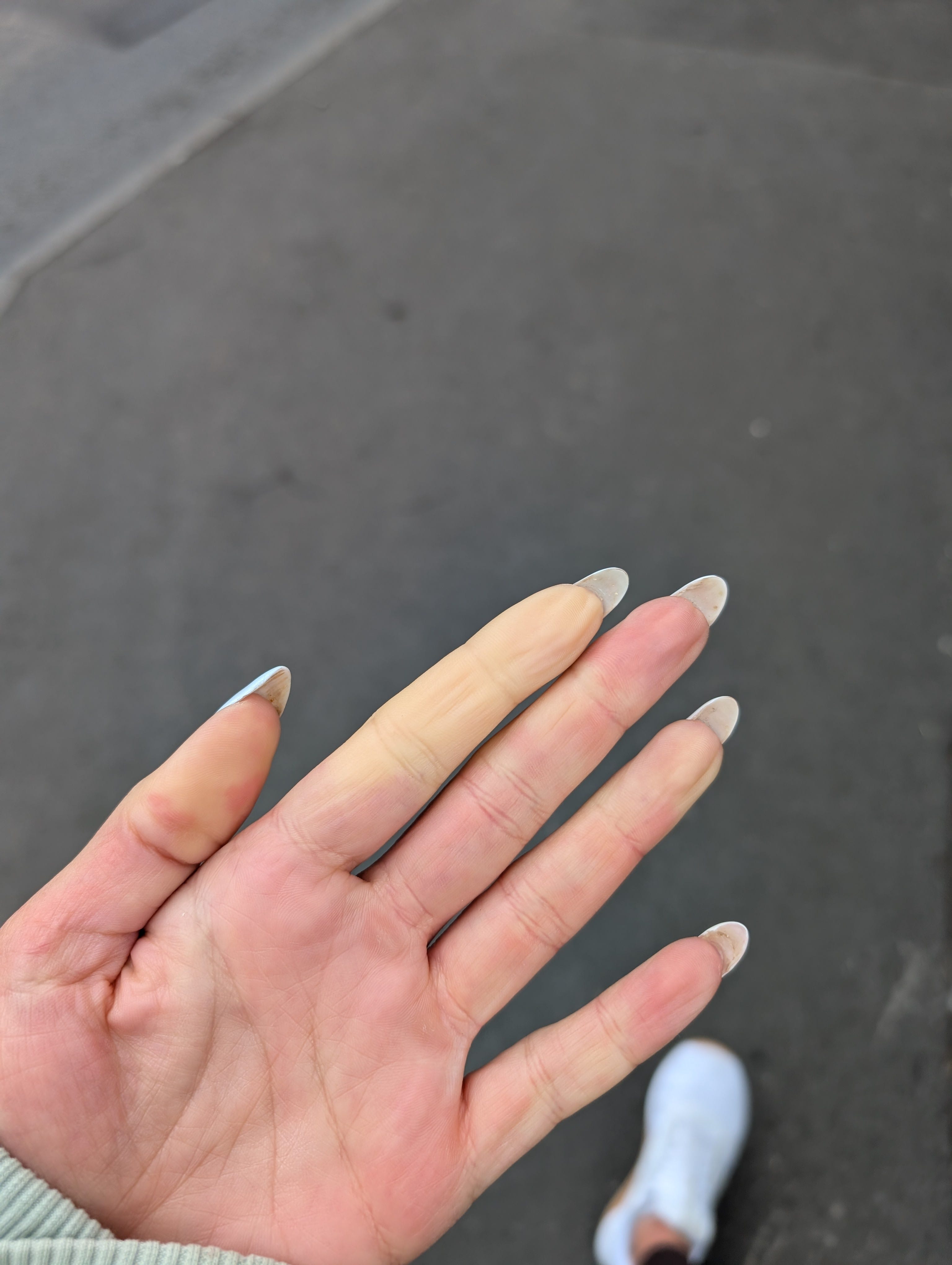
It’s considered autoimmune-related in some cases and often overlaps with conditions like Hashimoto’s. And it’s another example of how circulation affects how symptoms show up day to day.
When blood flow is restricted, tissues don’t get:
enough oxygen
enough nutrients
proper waste removal
Which can contribute to:
fatigue
cold intolerance
slower healing
that general “everything feels harder” feeling
Why lipoedema, lymph and thyroid symptoms often overlap
Lipoedema is a chronic condition that mainly affects women. It’s characterised by a disproportionate buildup of fat tissue, usually in the legs (and sometimes arms), alongside tenderness, easy bruising and a feeling of heaviness.
It’s often mistaken for simple weight gain or fluid retention, which is why it goes underdiagnosed in the UK.
While it’s not purely a lymphatic disorder, there is a clear overlap.
Research suggests that as lipoedema progresses, it can impair lymphatic function and lead to fluid stagnation in the tissues. A 2020 review in Journal of Clinical Medicine highlighted how microvascular changes, inflammation and reduced lymphatic flow contribute to the tissue changes seen in lipoedema.
When you layer this with thyroid dysfunction - where slower metabolism, reduced circulation and chronic low-grade inflammation are already present - it starts to make sense why symptoms like swelling, heaviness and puffiness can become more pronounced and harder to shift.
Where to start if you think this might apply to you
If you’re reading this and thinking this sounds like me, it’s worth getting proper guidance rather than self-diagnosing.
Lipoedema is still under-recognised in the UK, so it may require a bit of self-advocacy.
A good starting point is speaking to your GP and clearly describing your symptoms, especially if you experience:
heaviness
tenderness
easy bruising
fat distribution that doesn’t respond to typical diet and exercise
It can also be helpful to explore resources from Lipoedema UK.
Social media can raise awareness, but a proper assessment from a qualified professional is key.
So where does the thyroid come in?
This is where things started to make more sense for me.
Because for a long time, I felt like I was dealing with something that didn’t quite fit into one box.
When I first went to my GP with concerns about my legs and symptoms, they didn’t agree that it was lipoedema.
Which, if I’m honest, left me feeling a bit stuck.
Like I either had to accept it as “just how my body is” or keep digging.
So I did my own research, and that’s what led me to book a private online consultation with a specialist in Madrid, who then confirmed Type 2 lipoedema based on my symptoms and photos.
Two completely different opinions.
And somewhere in the middle of that, I started looking more closely at the bigger picture, including my thyroid.
Because the thyroid doesn’t just affect metabolism
We often think of the thyroid as a “metabolism” gland.
But it’s doing far more than that.
Emerging research is starting to show links between thyroid function, inflammation, and fluid balance.
Thyroid hormones influence:
vascular function
blood vessel tone
fluid movement within tissues
Autoimmune conditions like are also associated with chronic low-grade inflammation.
And that matters.
Because inflammation can directly impact both:
circulation
lymphatic drainage
Why this matters in real life
When thyroid function is lower or dysregulated, you’re not just dealing with fatigue.
You may also be dealing with:
slower circulation
increased fluid retention
reduced lymphatic flow
a higher inflammatory load
And when you layer those things together:
👉 circulation slows → lymph slows
👉 lymph slows → fluid builds
👉 inflammation increases → it becomes harder to shift
Which is when symptoms start to overlap.
Things like:
heavy legs
puffiness
swelling that doesn’t respond to diet or exercise
that “stuck” feeling in your body
This is what shifted my perspective
Instead of asking:
“Do I have lipoedema or not?”
I started asking:
“What systems in my body might not be functioning optimally?”
Because whether it was:
early-stage lipoedema
lymphatic stagnation
circulation issues
thyroid dysfunction
…or a combination of all of them
The approach that helped was the same:
👉 support the systems involved, not just label the condition
My legs, veins, and genetics (because let’s be real)
For most of my adult life, I hated my legs.
They were veiny, heavy, and never quite looked “toned” no matter what I did.
I covered them up constantly.
Avoided certain clothes.
Skipped beach days.
And felt embarrassed… sometimes even a bit grossed out by my own body.
A lot of that is genetic.
My gran had severe DVT, and on both sides of my family (English and Portuguese), we’re definitely more bottom-heavy.
So the odds were never exactly stacked in my favour 😅
Varicose veins were also part of the picture.
They occur when the valves in your veins weaken, allowing blood to pool instead of flowing efficiently back to the heart. This increases pressure in surrounding tissues and contributes to that heavy, swollen feeling.
And because circulation and lymphatic flow are so closely linked, sluggish blood flow can also mean poorer lymphatic drainage.
I did have EVLA treatment a few years ago to remove some of the more prominent veins, and I’m really happy with the result.
But I also knew there was more going on than just veins or cellulite.
The moment everything clicked
I remember taking a photo in a changing room years ago and thinking:
“This can’t be right. I’m young and looking after myself - why do I look like this?”


That photo on the left stayed with me for years. I was horrified.
And if I’m honest, it was the trigger I needed to dig deeper.
The photos I’m sharing are four years apart.
And I genuinely never thought I’d see this kind of change without something extreme.
Everything I tried to “fix” it
Once I went down the lymphatic rabbit hole, I tried everything:
weekly lymphatic drainage massages (cost me a fortune)
acupuncture (was told my liver and gallbladder were “stagnant”… fair considering my previous lifestyle)
rebounding/skipping
dry body brushing
increasing water + electrolytes
castor oil packs most nights
self lymphatic massage at home
And to be fair - these all helped.
Because again:
👉 lymph needs movement
But here’s what actually shifted things
The biggest changes didn’t come from one treatment.
They came from consistency with the foundations:
following an AIP-style approach for a 6-week period
continuing to remove foods that made me bloat & sluggish (oats, cold sugary smoothies, cheese, processed foods, ‘healthy’ snacks)
strength training consistently
calming my nervous system
walking daily (10k steps minimum)
drinking enough water & electrolytes (2-3 litres)
And sticking with it.
Over time, my legs changed.
Significantly.
To the point where:
I felt confident getting them out again, especially in summer which was unheard of for me!
I stopped obsessing over them
I no longer felt like surgery was my only option
And honestly, I never thought I’d say that.

What I still do now
Now it’s much simpler and more sustainable:
daily walking
regular strength training
hydration
enjoy a balanced diet getting the right amount of macros and nutrients daily
occasional Brazilian lymphatic drainage massages
Especially after flights.
I come out of those feeling like a different person.
Snatched, lighter, less puffy.
Highly recommend.
3 simple ways to support your lymphatic system daily
You don’t need to do everything.
Start here:
1. Move daily
Walking is enough. Consistency over intensity.
2. Stay hydrated
Lymph is fluid. It needs water to move. 2-3 litres daily.
3. Breathe properly
Deep breathing supports lymph flow more than people realise. Look up Diaphragmatic (deep abdominal) breathing for tips.
3 recipe ideas to support lymphatic flow (TCM-inspired)
Traditional Chinese Medicine focuses on:
reducing stagnation
supporting liver function
clearing dampness which is linked to stagnation
1. Ginger + lemon warm water
Simple, warming, supports circulation. Add a pinch of salt to this for added mineral boost.
2. Bitter greens bowl
Rocket, kale, olive oil, lemon, seeds.
Supports liver and digestion.
3. Light vegetable broth
Hydrating, easy to digest, great when you feel heavy or sluggish.
Final thoughts
This isn’t about self-diagnosing.
And it’s not about saying lymphatic issues are the cause of everything.
But it is about recognising that:
👉 the body is connected
👉 symptoms often overlap
👉 and sometimes what looks like one condition… isn’t the full story
For me, this was a huge shift.
And one I think more women, especially those navigating thyroid issues, should be aware of.
I’d love to know
Have you ever looked into your lymphatic health before?
Or tried anything that actually helped reduce swelling, puffiness or that heavy feeling?
Reply and let me know - I know I’m not the only one who’s gone down this rabbit hole.
Excellent read on how the lymphatic system is interconnected in the body and where the thyroid plays a role. It’s an important subject also for cancer patients because they can have similar issues due to a heavy medical load of various treatments. And lymphedema in various forms can appear. Thank you for explaining.
Incredible. I needed this encouragement from seeing someone make the changes doctors don’t believe are possible! Great work, and thanks for sharing